Cryogenic globe valve
Review a manual flanged cryogenic globe valve with an extended bonnet. Define minimum design temperature, orientation, insulation limits and the required acceptance tests before requesting a quote.
Request a quote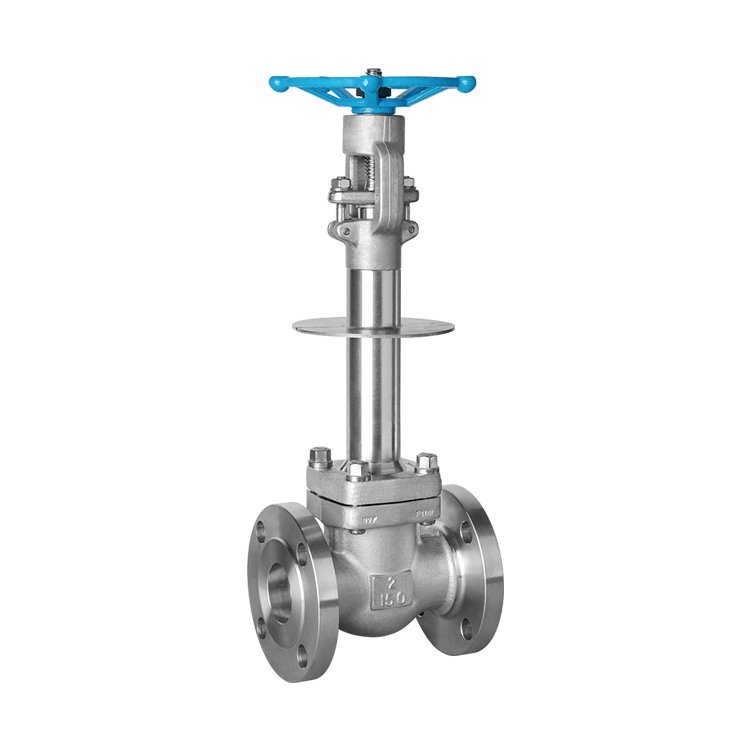
Check the proposed configuration
An extended bonnet places the stem packing farther from the cold body. The required extension and installation orientation depend on the design and fluid service. For the proposed assembly, confirm the allowable pressure-temperature conditions, wetted materials, flow direction and seating requirements. Specify whether the valve will see liquid, gas or changes of phase during cooldown and warmup. Provide these cases for review along with normal operating conditions and the maximum differential the valve must shut against.
Mark the insulation or cold-box boundary and the valve centerline on the project drawing. Specify the intended stem angle and the envelope available above the body and around the handwheel. For a replacement, verify both flange ends and face-to-face length and check access to the packing and stem assembly. Ask the supplier to identify the approved orientation and dimensions for that particular service on the offered model documentation.
Compare quotes on the same basis
| Item | Send with your inquiry | Check on the offer |
|---|---|---|
| Process and rating | Fluid, phase, pressure and minimum design temperature across service conditions | Written service limits and complete component material schedule |
| Installation | Bonnet angle, insulation or cold-box drawing and operating envelope | Approved orientation, extension length and access for service |
| Flow and shutoff | Required flow direction, pressure drop or throttling data and maximum differential | Seat and trim, supported flow direction and specified shutoff acceptance |
| Low-temperature tests | Test specification and edition, temperature, medium, pressure and witness requests | Accepted procedure, offered test scope and records traceable to the valves |
If the project requires cryogenic testing, list the exact conditions and whether every valve must be tested or sampling is permitted. Confirm that the proposed documents connect each report to the valve tag or serial number and that the acceptance criterion matches the purchase specification. For a defined throttling duty, include upstream and downstream conditions and give the operating flow points in addition to the required isolation performance.
Before you order
Review the selection question and confirm the offered drawing, materials and requirements with your inquiry team.
Which minimum temperature should I enter on the inquiry?
Use the minimum design condition specified for the line and include the operating range, process fluid, pressure and relevant cooldown or shutdown conditions. Ask for the limit of the offered assembly, with material and test documentation tied to the actual model. A bonnet style alone cannot establish a minimum temperature rating.
Can the extended bonnet be installed horizontally?
Provide the intended stem angle and ask for the approved position for the offered model, service phase and installation. The orientation can affect the relationship between packing and the cold region. Review the approved drawing and keep operating and maintenance access available.
Can the same globe valve cover several cryogenic fluids?
List each service separately with its fluid composition, phase, minimum temperature and pressure. Ask for the applicable limits and materials per service. Confirm any differences in allowable mounting, cleaning and testing before approving a common model.
Why does insulation clearance matter on a retrofit?
The insulation boundary affects access to the bonnet, packing and operator, as well as which parts remain exposed. Send the insulation outline and installed spool length. Check the proposed extension, operator travel and servicing clearance on the approved drawing.
How should I compare two low-temperature test offers?
Compare test procedure, medium, temperature, test pressures and allowable leakage at the same duty. Identify the number of valves tested and any witness points. Ask how records are traced to delivered valves and identify any acceptance deviations before purchase.
Request a project quote
Send the required size, process duty, installation dimensions and quantity.