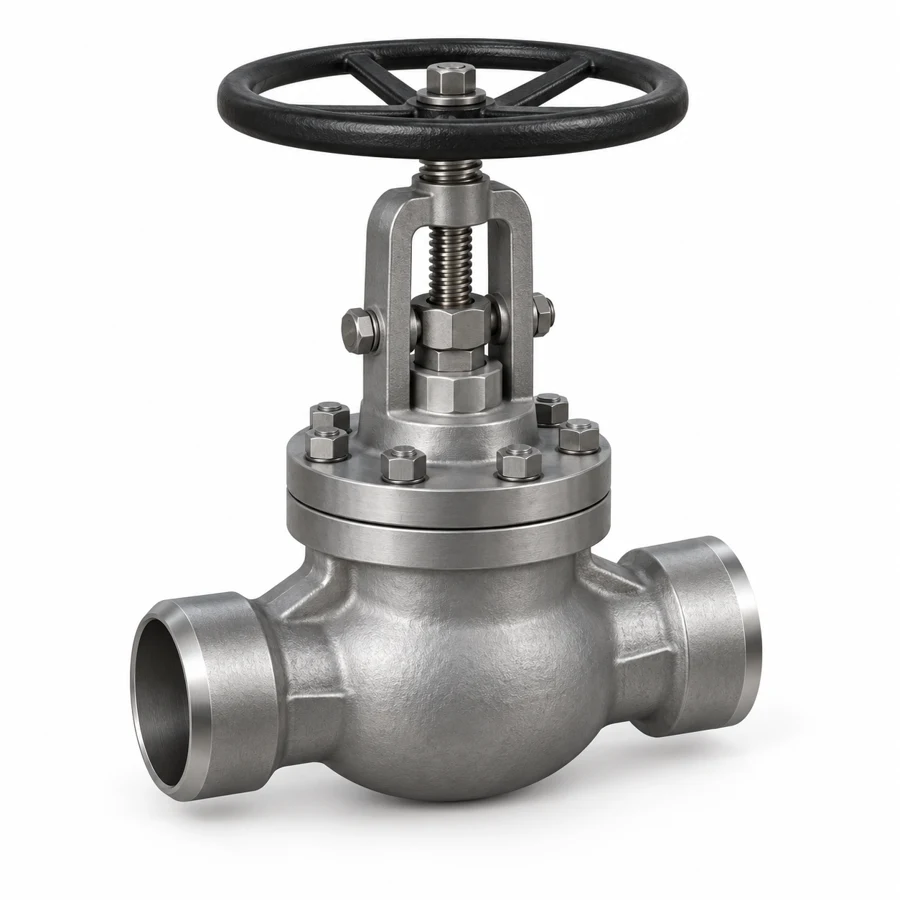
Straight-pattern arrangement
Confirm the proposed bonnet joint and flow data from the offered model.
Specify a high-pressure globe valve for industrial isolation or throttling. Compare pressure-temperature ratings, bonnet construction, trim and the differential the valve must shut against.
Request a quoteConfirm the proposed bonnet joint and flow data from the offered model.

Compare model-specific pressure loss and the clearance needed for the inclined stem and operator.
List design and operating pressure with the temperature that occurs in each case. For steam or hot process lines, include warm-up, shutdown and expected thermal cycling. Confirm the proposed body's and bonnet's rating basis by material and configuration, including the connection and joint type. Specify the maximum differential across the closed seat separately. If pressure seal or bolted bonnet construction is required, request the joint drawing, service limits and recommended inspection access before comparing offers.
For throttling, send minimum, normal and maximum flow with inlet and outlet pressures, temperature and fluid phase at each point. Ask the supplier to check whether the trim can cover the range and assess cavitation, flashing or noise as appropriate to the service. For isolation, specify leakage acceptance and the required seat test. Confirm the indicated flow direction, open-stem height and operator clearance. With welded ends, include the pipe specification and the required end preparation.
| Item | Send with your inquiry | Check on the offer |
|---|---|---|
| Pressure boundary | Design pressure and coincident temperature for each case | Construction, material and pressure-temperature basis |
| Flow duty | Flow range, inlet and outlet pressure, fluid phase and limits | Trim flow data and assessment of service conditions |
| Shutoff | Maximum differential, flow direction and leakage acceptance | Seat design, operator sizing and seat test basis |
| Installed fit | Piping ends, spool length and access for operation | Approved drawing, end geometry and service clearances |
For a replacement valve, send the nameplate and existing drawing with the current operating data. If the valve is being changed because it is noisy, leaks or is hard to operate, describe when the condition occurs. Val-Man can review those requirements with the valve tag and quote the relevant construction, operator and verification scope.
Review the selection question and confirm the offered drawing, materials and requirements with your inquiry team.
The body rating defines the allowable pressure at a given temperature for the pressure boundary. Shutoff differential is the pressure difference the closed valve must hold across its seat. Include both in the inquiry so the supplier can check the proposed construction, trim, leakage and operator requirements.
The choice depends on the project specification, pressure-temperature cases, operating cycles and maintenance plan. Ask for the proposed joint construction, gasket or seal details and disassembly requirements. Compare the documented service limits against the same operating cases for any alternate bolted-bonnet offer.
Some Y-pattern designs have a less restrictive flow path. Compare the flow coefficient for the actual offered sizes and trim rather than assuming the same result across the category. If the valve also throttles, ask for flow data at relevant travel positions.
Provide the steam condition, minimum and maximum flow, inlet and outlet pressures and temperature. Include start-up and shutdown conditions and any noise or operating constraints. If the valve also isolates, list the closed differential, seat leakage criterion and required test conditions.
Use pressure class with the design temperature, material schedule, trim and connection details. Set a common basis for flow, shutoff and inspection. Ask each supplier to note any deviations from that basis so you can compare the assembled valves and their document scope.
Send the required size, process duty, installation dimensions and quantity.