Pneumatic butterfly valve
Specify the valve body, seat and disc together with the pneumatic actuator and controls. Send the process duty, air supply and required response to utility loss.
Request a quote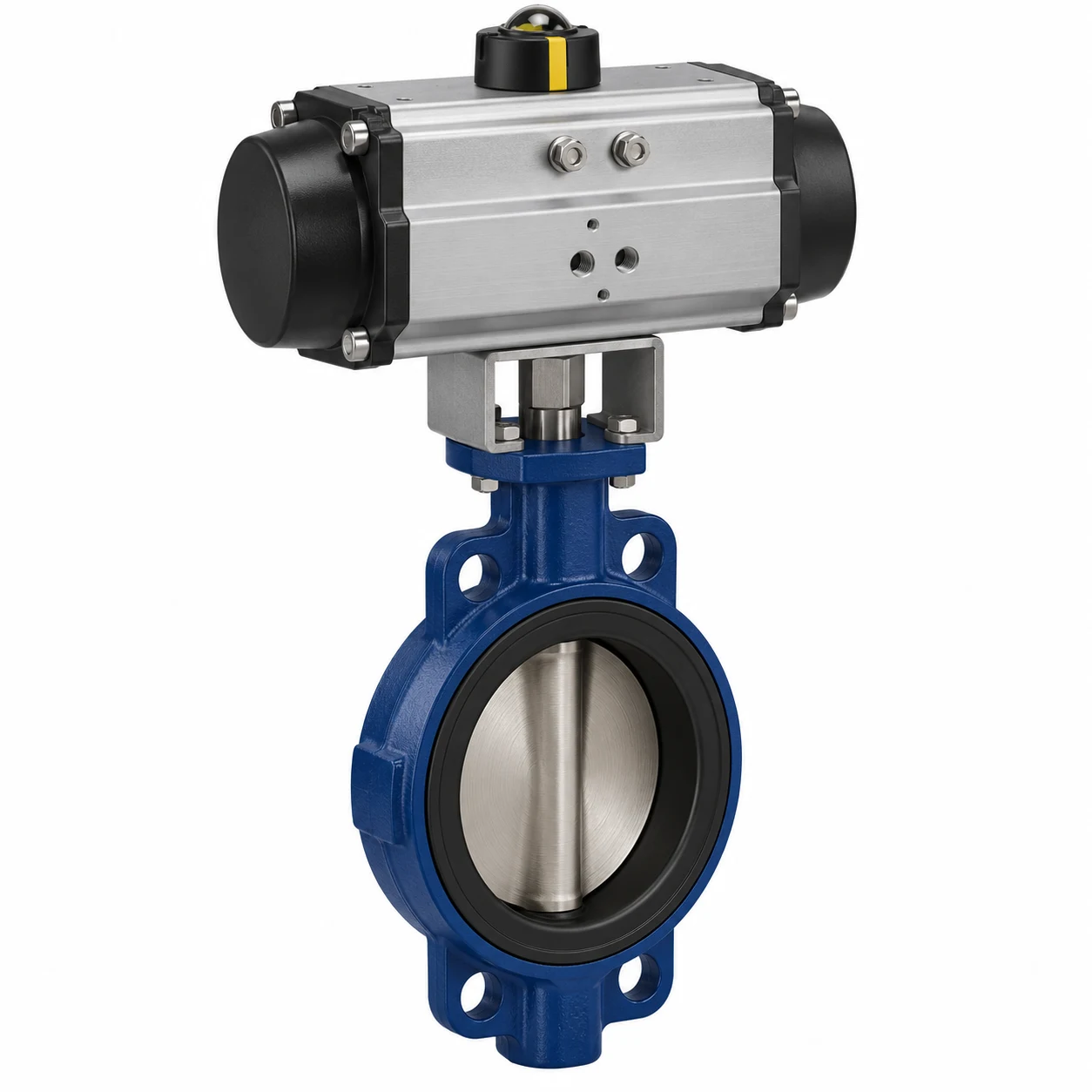
Check the proposed configuration
A pneumatic butterfly valve combines a rotating disc with an air-powered quarter-turn actuator. Begin with the valve duty. Give the normal operating conditions, maximum shutoff differential, fluid properties and number of cycles. If the job includes throttling, send the flow points and corresponding upstream and downstream conditions. Request the torque basis for the selected size, seat and disc at the relevant operating conditions, then check the actuator output through the stroke. Specify the minimum running pressure at the actuator while it moves.
Check the proposed valve outline and actuator orientation against the installation. A wafer or lug body needs compatible mating flanges and clear movement of the disc into the pipe bore. Show nearby elbows, liners or equipment that could limit travel. Include the space required for air connections, switches and manual override. Ask the supplier to confirm support and access requirements on the assembly drawing.
Compare quotes on the same basis
| Item | Send with your inquiry | Check on the offer |
|---|---|---|
| Valve design | Fluid, operating duty, differential and leakage basis | Body pattern, disc, seat, pressure-temperature limits and seal direction |
| Actuator sizing | Minimum air pressure while stroking and process operating cases | Valve torque basis and actuator output during travel |
| Controls | Duty cycle, solenoid voltage, indication and required fail action | Circuit drawing, accessory list and stated limits on failure response |
| Installation | Pipe flange details, bore, orientation and space around the valve | Installed length, disc sweep and complete operator envelope |
Compare complete assembled packages on the same valve duty and supply pressure. Ask the supplier to list accessories, including separate or optional equipment, so the controls team can verify the scope. If several valves move together, give the expected simultaneous demand. Confirm that the proposed stroke times match the required operating sequence without relying on the compressor header pressure alone.
Before you order
Review the selection question and confirm the offered drawing, materials and requirements with your inquiry team.
What should the valve do if the air supply fails?
State the required position or behavior for loss of compressed air, electrical power and control signal separately. Ask how the offered actuator and pneumatic circuit achieve each response and what conditions apply. If the action must be proven, include the failure scenarios and acceptance method on your inquiry.
Should I choose a double-acting or a spring-return actuator?
A double-acting unit uses air for both strokes, while a spring-return unit uses spring force for a designated direction. Choose by the required utility-loss response, available pressure and valve torque. Ask for the proposed component selection and circuit rather than assuming the fail action from the actuator description.
Are solenoids and position switches included?
List the required switching voltage, signals, feedback and enclosure requirements. The quoted assembly schedule should identify each included device and any separate site hardware. Ask for wiring and pneumatic information if the valve must tie into an existing control cabinet.
Why do suppliers ask for minimum air pressure?
Pressure at the actuator can fall during travel as air passes through regulators, tubing and solenoids. Provide the lowest pressure expected during this movement. Ask the supplier to document the available actuator torque at that pressure and the conditions assumed for stroke timing.
Can I automate a valve already installed in the line?
Provide the exact valve tag, condition, stem and mounting interface, travel and process duty. Ask the supplier to check torque, bracket and coupling, travel stops and assembly clearance. If the existing valve has been modified, document the changes before confirming compatibility.
Request a project quote
Send the required size, process duty, installation dimensions and quantity.