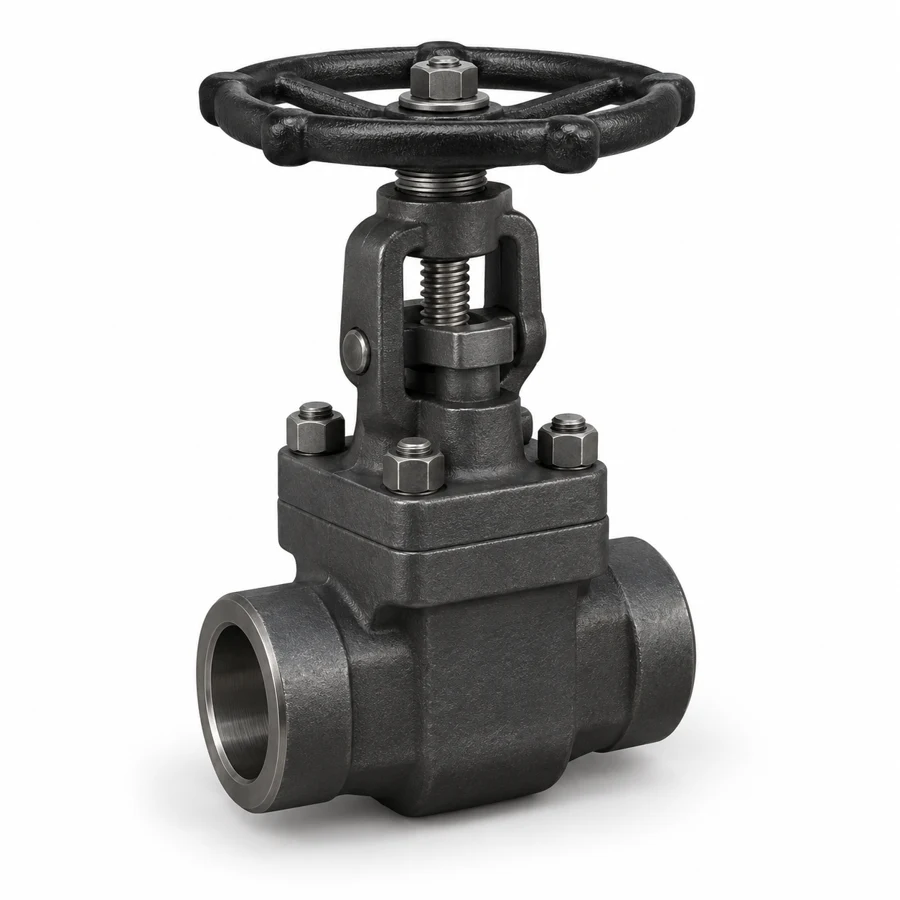
Compact manual arrangement
Compare the offered end drawing and access to the operator and stem packing. Confirm the bonnet joint and pressure boundary materials.
Specify a forged steel gate valve for industrial isolation. Review body and bonnet grades, threaded or welded ends, and any API 602 design or testing requirements on the inquiry.
Request a quoteCompare the offered end drawing and access to the operator and stem packing. Confirm the bonnet joint and pressure boundary materials.
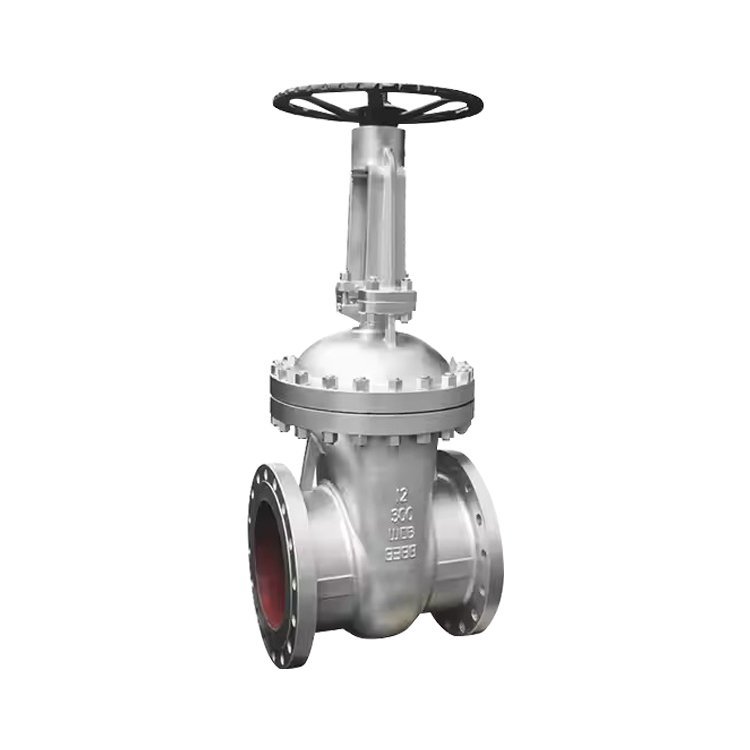
If flanged ends are specified, review facing, bolting, installed length and complete operating envelope on the proposed valve drawing.
Use the piping class to define the body and bonnet grades, product form and applicable design requirements. ASTM A105 is a carbon steel forging specification. Verify the required grade by part, including the stem, wedge, seat, packing and gasket. Ask for the proposed pressure-temperature limits and the governing standard for the complete valve. If API 602 is a project requirement, include it on the requisition and request documentation for the specific size, ends and construction offered.
Confirm whether the line requires threaded, socket-weld, butt-weld or flanged ends. Specify the end details and available spool dimensions, including pipe wall and required preparation for welded connections. For a rising-stem valve, check full-open height and packing access. Compare the bonnet joint with your maintenance plan. If the valve will see temperature cycling or prolonged standby, give the pressure and temperature conditions at opening and closing so the supplier can review the trim and operator.
| Item | Send with your inquiry | Check on the offer |
|---|---|---|
| Materials | Component grades and traceability requirements | Offered pressure boundary, stem, wedge and seat materials |
| Bonnet construction | Required joint or maintenance access | Joint details, sealing arrangement and parts scope |
| End fit | Pipe specification, ends, length and clearance | Verified connection geometry and full-open dimensions |
| Acceptance | Standards, tests, leakage and witness requirements | Test scope, reporting basis and written deviations |
Send Val-Man the line list and identify the applicable end, material, test and drawing requirements by tag. If a supplier proposes a different bonnet or end arrangement, compare it against the piping specification and the maintenance plan before award. Ask for any exceptions to be listed with the quote.
Review the selection question and confirm the offered drawing, materials and requirements with your inquiry team.
Forging describes how a component is made. Confirm the applicable design standard, edition and model on the offer. If API 602 is required, specify it with the body and bonnet grades, size, ends and required inspection documents so the exact configuration can be reviewed.
Provide pipe size, wall or schedule, material and the project end requirements. Ask for a dimensioned end drawing and installation instructions for the offered valve. Coordinate welding, any heat treatment and inspection requirements with the piping team before the work is scheduled.
A bolted bonnet has a removable joint subject to the manufacturer's procedure. A welded bonnet uses a welded joint and generally requires a different service plan. Review the drawing, disassembly requirements and spare-parts scope for the offered configuration before selecting the joint.
A conventional wedge gate valve is generally specified for full-open or full-closed isolation. If your system needs frequent flow regulation, provide the minimum and maximum flow and the associated differential. Ask for a configuration designed and documented for that control service.
Request material records tied to the components specified on your order, the arrangement drawing and test reports linked to the valve tag. Include any witness or hold points during quotation. Confirm that the edition of each required standard and any exceptions appear in the purchase documentation.
Send the required size, process duty, installation dimensions and quantity.