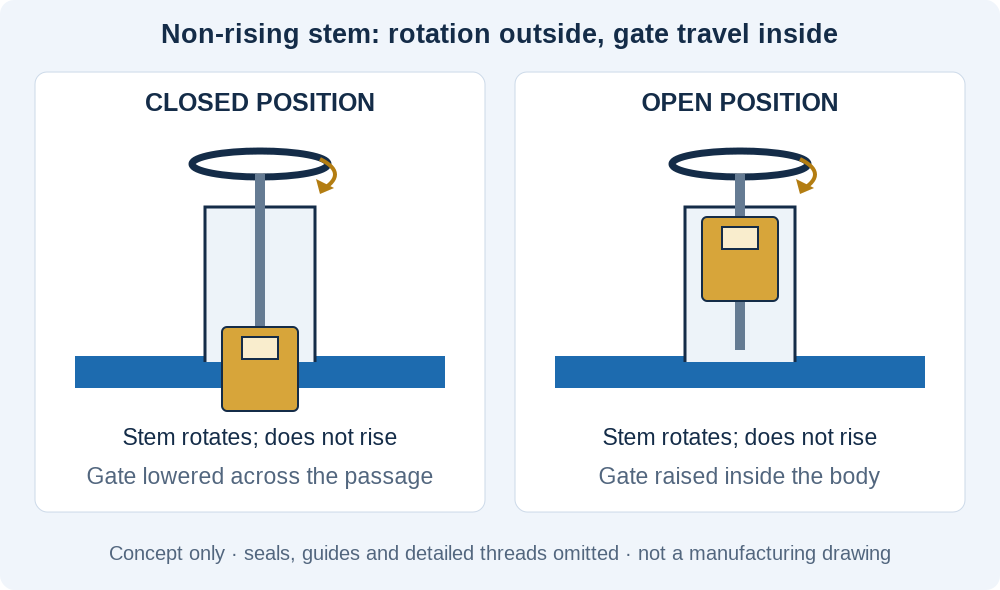
Non-rising stem operating principle
Use the diagram to discuss internal movement and verify actual height and access on the proposed drawing.
Evaluate a non-rising stem gate valve for isolation where overhead space is limited. Check the actual operator envelope, position indication and service access before specifying the design.
Request a quoteUse the diagram to discuss internal movement and verify actual height and access on the proposed drawing.
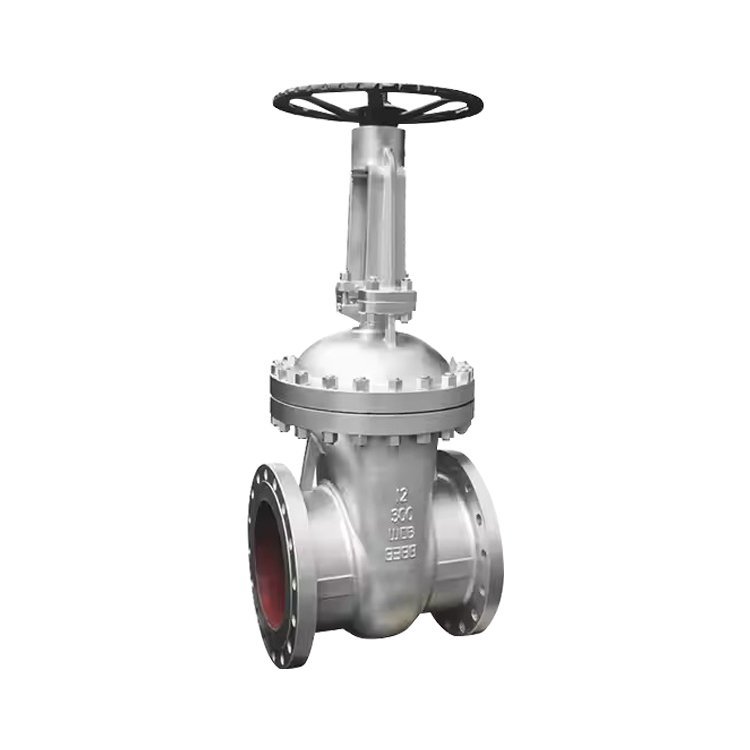
Compare full-open stem height, position visibility and service access when the piping class permits either layout.
In a common non-rising stem design, the stem rotates without moving upward outside the valve while the gate travels internally. That arrangement can reduce the external height change between open and closed. Compare actual drawings for the available space. If a rising stem normally gives your operators a visible travel reference, specify the required position indication separately. Ask for the stem and gate-nut materials and their exposure to the fluid, particularly where corrosion, solids or long idle periods may affect operation.
Measure the available height and access around the handwheel, gear unit or operating nut. Include the space needed for opening, packing work and any removal required by the maintenance plan. For a valve below grade, tell the supplier the operating depth, extension requirements and required operating direction. For a retrofit, compare the installed length, flange details and condition of the surrounding piping. Ask for the operator and access envelope on the same drawing as the valve body.
| Item | Send with your inquiry | Check on the offer |
|---|---|---|
| Installed envelope | Height, side clearance and any pit or box dimensions | Operator drawing and maintenance envelope |
| Stem and gate nut | Fluid, temperature, exposure and operation frequency | Materials, thread location and service instructions |
| Position | Local indication or control system status needed | Indication arrangement, switch scope and operating direction |
| Isolation | Maximum differential, required leakage and pipe interface | Seat construction, rating, dimensional and test details |
Send Val-Man the piping sketch with a measured height limit and a note on how operators will verify valve position. If the location is buried or difficult to access, include the extension layout and who will operate it. Ask for a drawing and any required indication or maintenance features by tag.
Review the selection question and confirm the offered drawing, materials and requirements with your inquiry team.
Specify the indication needed for your installation. The external stem height usually stays fixed through the stroke, so confirm whether the offered operator has a local indicator, switches or another way to identify travel. Verify the indication arrangement and acceptance requirements on the drawing and during commissioning.
Check the handwheel or gear envelope, access for tools and any space required to withdraw components. The external travel difference can improve fit, but the equipment still needs operating and maintenance access. Use the proposed outline drawing together with your site measurements.
Confirm installed length, ends, pressure-temperature limits, shutoff needs and operator clearance. Verify the maintenance arrangement and required position indication with the piping team. The nominal size helps identify the line but leaves the valve geometry and service requirements to be checked.
Share the particle size or solids loading where known and describe how often the valve moves. Ask for the stem, gate nut, wedge and seat materials and the position of internal threads relative to the fluid. Request service guidance for the actual installation.
Provide operating depth, mounting details, desired operating direction and the position of the valve box or floor. Ask for the extension drawing and allowable operator effort or torque. Include any local position indication, visibility and access requirements in the inquiry.
Send the required size, process duty, installation dimensions and quantity.