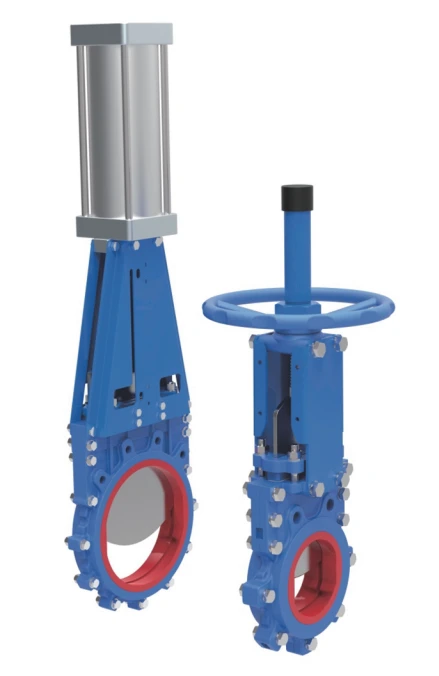
QP Series lined body
Review the offered sectional drawing to identify the lining coverage and inspect transitions to the connected pipe.
Review the QP Series QPZ73X polyurethane lined knife gate valve for solids-bearing isolation. Specify the slurry, liner exposure and shutoff conditions before approving the valve and spare-parts scope.
Request a quoteReview the offered sectional drawing to identify the lining coverage and inspect transitions to the connected pipe.
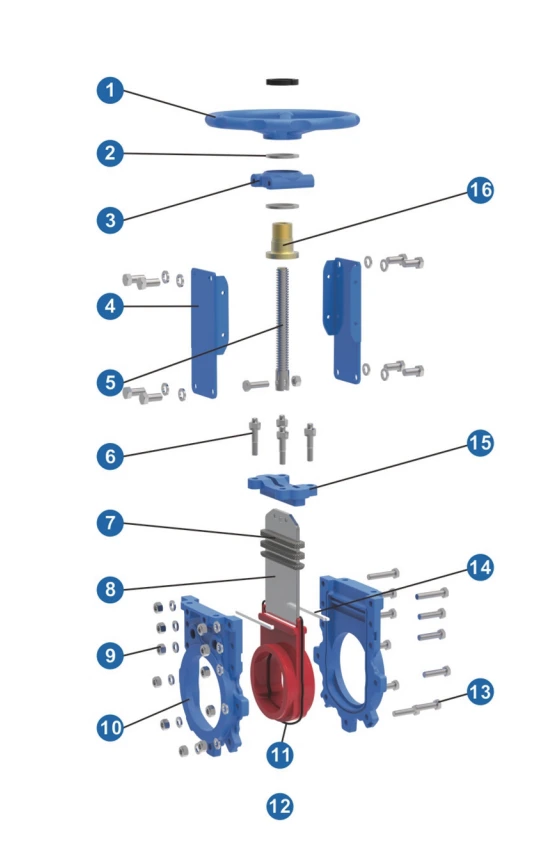
Check which pieces are replaceable and ask for the ordered part identifiers and material requirements.
Give the carrier fluid, suspended solids, particle size distribution, concentration and temperatures. Identify cleaning or flushing chemicals and any periods of prolonged immersion or shutdown. The QP catalog identifies polyurethane in the sealing configuration. Ask for the offered compound and a sectional drawing that shows which parts of the liner and seals contact the process. Specify the gate, body and packing requirements separately. Compare the material limits against the expected fluids, temperature and wear conditions over the full service cycle.
Send the project flange and bore details, including the pipe lining and any abrupt change in internal diameter near the valve. Check installed length and clearance for the gate through its full stroke. List differential pressure and leakage acceptance for both directions if the line can reverse under isolation. For a powered arrangement, give the minimum supply and describe how the valve must operate after a stoppage. Ask for service instructions and verify whether the plant can access and replace the agreed wear parts during its shutdown window.
| Item | Send with your inquiry | Check on the offer |
|---|---|---|
| Lining and seats | Actual fluid, solids, cleaning and temperature | Compound, lining coverage and exposed surfaces |
| Shutoff | Differential and leakage acceptable in each direction | Rating and test scope for the ordered seat configuration |
| Pipe interface | Flanges, real bore, liner details and service space | Installed geometry, alignment and operator clearance |
| Maintenance | Wear history and shutdown schedule | Removable parts, service procedure and spare-parts list |
Send Val-Man your process data, pipe lining details and the reason for replacement, if applicable. For recurring wear, identify the affected component and when it fails. Ask for the offered material schedule and replacement parts by tag so a quote can be compared with your planned maintenance work.
Review the selection question and confirm the offered drawing, materials and requirements with your inquiry team.
Review the specific compound against your carrier fluid, temperature and cleaning chemicals. Describe how solids move, settle and wear the current components. Ask for the lining coverage and materials for all exposed parts, then compare the offered design with the plant’s actual service conditions.
A seat is part of the sealing interface, while a liner describes where material covers a surface. Ask for a section drawing showing which surfaces are lined and which parts form the seal. Confirm the compound and replacement procedure for each part in the quoted assembly.
Ask which liner or seat parts can be replaced and which packing and seals are changed when the valve is serviced. Request part identifiers and materials for the exact size and construction. Verify any tool and clearance requirements against your maintenance plan.
Provide the actual liner inside diameter, face details and adjacent fitting geometry, plus the flange standard and bolt pattern. Check the offered passage alignment before purchase. Ask for the valve end details and installation instructions for the particular flange and liner interface.
Use the same slurry data, pressure directions and leakage criteria for both configurations. Review lining or seat construction, passage and service access on model drawings. Compare the maintenance procedure and wear-parts scope along with the valve price and the site’s shutdown requirements.
Send the required size, process duty, installation dimensions and quantity.