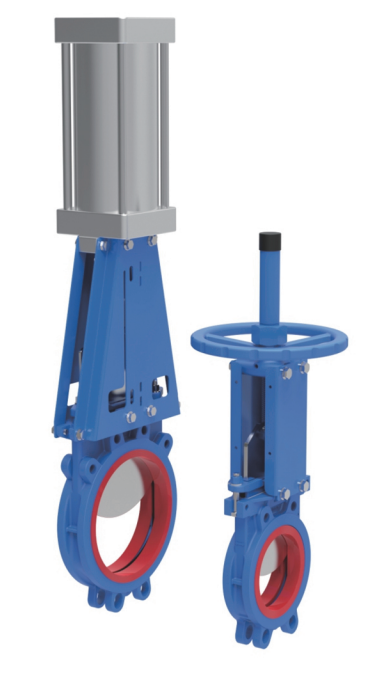
QS grooveless catalog arrangement
Review the proposed gate, seat and operator against actual process and installation conditions.
Review the QS Series QSZ73X grooveless knife gate valve for mining slurry isolation. Specify solids, settling conditions and the wear-part scope alongside your piping and shutoff requirements.
Request a quoteReview the proposed gate, seat and operator against actual process and installation conditions.
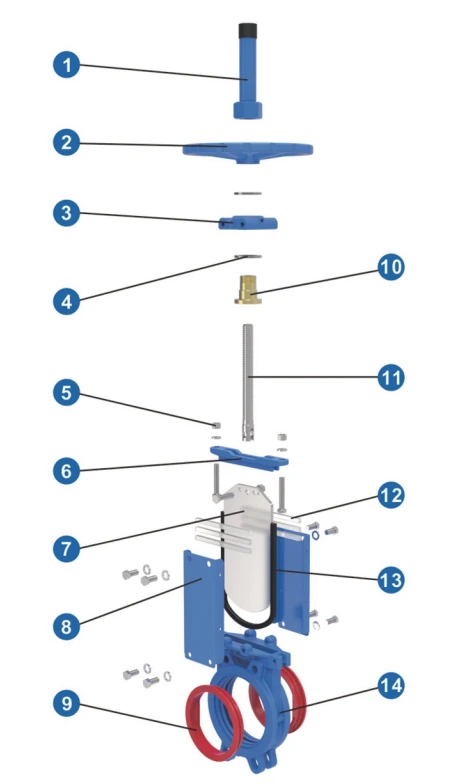
Identify the proposed wear parts and service access from the offered drawing and parts list.
Selection starts with the slurry rather than the nominal pipe size alone. Give the solids type, particle distribution, concentration, carrier liquid and temperature. Include the conditions during a slowdown, a stop and the first cycle after restart. A grooveless layout should be reviewed on the section drawing with attention to the actual seating area, how solids can accumulate and how the plant clears the line. The QS catalog lists a polyurethane seat. Confirm the offered seat compound, gate material and compatibility with the slurry and flushing fluids.
Compare the clear passage, liner geometry and mating connection with the proposed outline. Give maximum differential for either pressure direction and the operating conditions when the gate opens or closes. For powered units, send available supply and expected cycle frequency. Ask the supplier for the wear-part list, gate envelope and recommended access for seat and packing work. If operators have observed specific failures, identify whether they occur after settling, during closure or following long periods between maintenance.
| Item | Send with your inquiry | Check on the offer |
|---|---|---|
| Solids service | Particle distribution, concentration and settling history | Seat and gate choice, passage and maintenance guidance |
| Shutoff | Differential, direction and required leakage | Offered model rating and seat test criteria |
| Operator | Available supply, timing and cycle frequency | Actuator scope, travel and sizing basis |
| Wear and access | Service space, past failure and spare inventory needs | Exploded drawing, recommended spares and removal envelope |
Send Val-Man the slurry data and a piping sketch, along with the valve tag where replacements are involved. Ask for the quoted seat and gate materials, installation outline and expected maintenance access, plus a separate wear-parts list. Those documents let the maintenance team compare how the assembly fits the site and what must be stocked.
Review the selection question and confirm the offered drawing, materials and requirements with your inquiry team.
Describe how long the line is idle, how quickly solids settle, and whether there is an approved flushing sequence. Review the proposed seat area and gate travel on the drawing and give the supplier the pressure condition at restart. Compare the offered materials and service procedure with your site history.
Use the section drawing to see where the slurry contacts the gate, seats and body. Send the settling history and flushing details so the supplier can review the actual duty. Keep any planned cleaning and shutdown procedures tied to your plant's operating requirements.
Ask for the compound, expected service limits and compatibility with the carrier liquid and cleaning media. Review the particle characteristics and abrasion exposure. Request the recommended spare part and replacement instructions for the exact valve size and ordered seat configuration.
Compare the actual open passage, sealing arrangement and full travel envelope of the offered models. Provide the same solids data, pressure direction and allowable leakage for both quotes. Check installation and access for wear parts before comparing maintenance scope or price.
Confirm the available operator options for the selected valve size and service conditions. Specify required effort for manual operation or power supply and controls for powered operation. Ask for both the outline and the load basis with the requested pressure differential and cycle conditions.
Send the required size, process duty, installation dimensions and quantity.