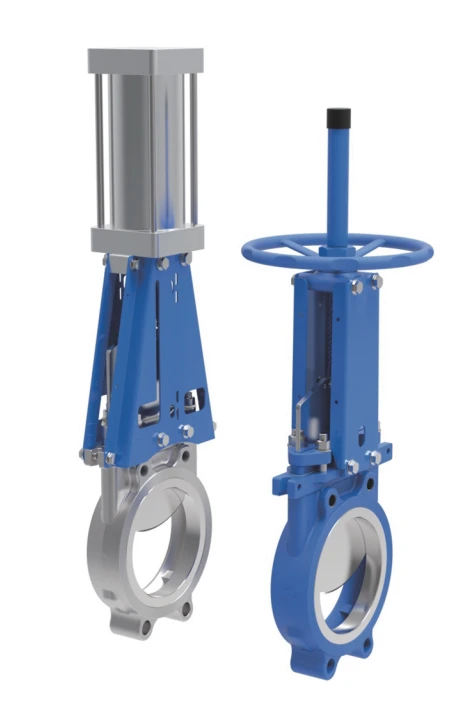
QV Series handwheel and cylinder layouts
Compare the full-height envelope, access and operator scope for the offered configuration.
Review the QV Series QVZ73X knife gate valve for isolation with a specified pressure direction. Put the closed-side differential, connection details and gate travel on the inquiry before comparing configurations.
Request a quoteCompare the full-height envelope, access and operator scope for the offered configuration.
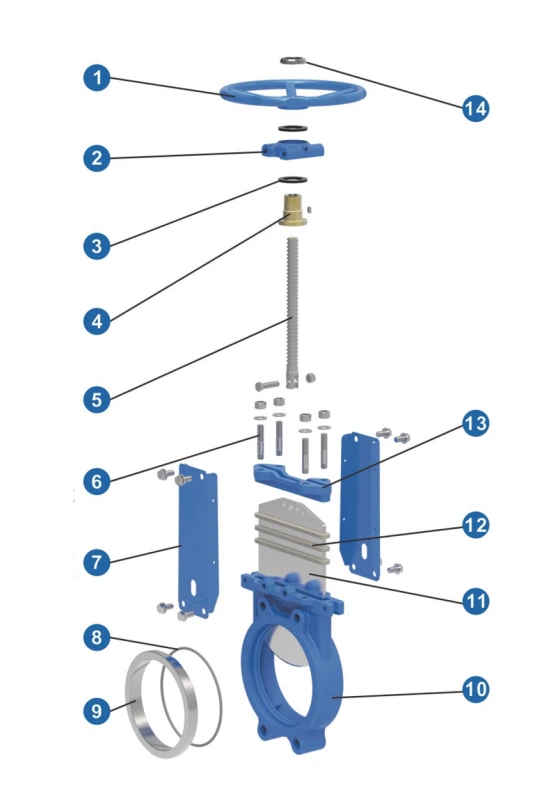
Use the proposed part drawing to verify the pressure side, seat, packing and spare component identifiers.
Start with the pressure source when the valve is shut. Identify the side that remains pressurized during normal isolation and describe any start-up, drain-down or pump-trip case that can reverse that differential. Mark these cases on the piping sketch and ask for the model-specific seating direction and test basis. If the line must hold pressure from either side, give the required leakage and pressure for both sides so a bidirectional option can be evaluated against the same duty.
Send the mating flange details and actual pipe bore with available clearance above and below the valve. Confirm the offered wafer or lug arrangement, installed length and bolting interface. Give the fluid, solids loading where applicable and cleaning exposure so the supplier can review gate, seat and packing compatibility. For remote operation, report available power or air pressure, expected travel time and cycle rate. Check how manual access, position indication and maintenance of packing or seats will be handled in the installation.
| Item | Send with your inquiry | Check on the offer |
|---|---|---|
| Sealing direction | Pressure side and leakage criterion in each operating case | Installation markings, seat orientation and test direction |
| Fit | Pipe bore, flange and bolting details and available length | Connection drawing, gate stroke and installation limits |
| Materials | Process chemistry, solids and cleaning exposure | Component material schedule and service limits |
| Operation | Supply, response, cycle frequency and maintenance access | Operator sizing basis, accessories and service envelope |
Send Val-Man the valve tag, pressure-side sketch and required test conditions. For replacements, include the old tag and note any past problems during drain-down or pressure reversal. Ask for the quoted pressure direction, mounting layout and seat details in writing so engineering, operations and procurement share the same acceptance basis.
Review the selection question and confirm the offered drawing, materials and requirements with your inquiry team.
Describe the side that will carry pressure when the gate is shut and any possible reversal. Confirm the offered model’s seating direction, nameplate or body markings and installation instructions. Use the approved drawing and the line sketch together during the site review.
Treat normal flow and the differential during isolation as separate items on the inquiry. Mark both on the piping sketch and ask the supplier to identify the required valve orientation. Include shutdown or drain cases where fluid pressure might come from the opposite side.
State the maximum reverse differential and required leakage criterion. Ask for written confirmation of the design and tests that cover both cases. If positive sealing is needed from either side, compare documented bidirectional configurations using the same service conditions.
Give the exact maintenance scenario, including which flange may be absent and the pressure that remains on the other side. Ask for the offered model’s documented limits and installation arrangement for that case. Verify any approval with the piping and isolation teams.
State the side pressurized, differential, test medium, allowable leakage and governing procedure. Add witness requirements and records by valve tag. Ask the supplier to describe how the proposed test covers the required direction and to identify any exceptions in the offer.
Send the required size, process duty, installation dimensions and quantity.