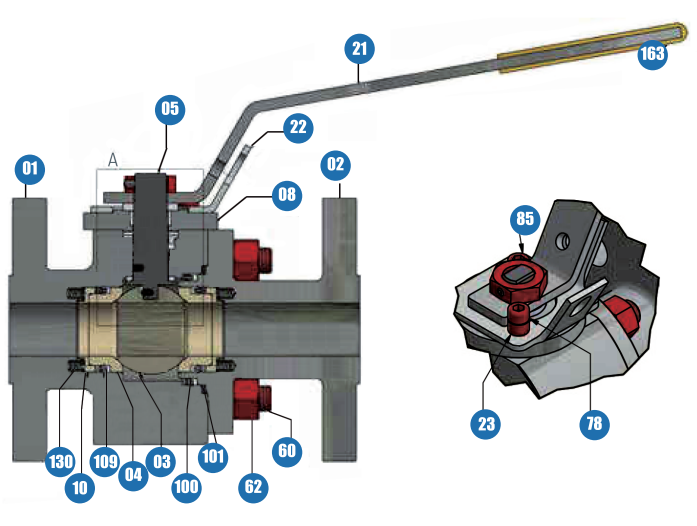
MTS-F floating configuration
Review the load on the seat at the maximum shutoff differential along with body and connection dimensions. Confirm the torque for the specified duty.
Compare MTS-F floating and MTS-T trunnion metal seated ball valve configurations. Specify service temperature, particles, seating performance and required actuation.
Request a quoteReview the load on the seat at the maximum shutoff differential along with body and connection dimensions. Confirm the torque for the specified duty.
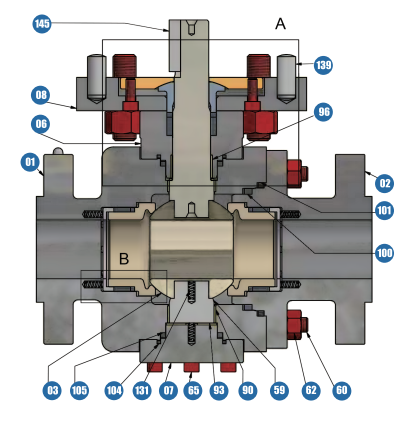
Review the seat arrangement, cavity pressure requirements and proposed operator. Specify any required isolation or cavity-relief functions explicitly.
Metal seated ball valves use a metal ball and seat contact arrangement. They are often considered where the medium, temperature, cycling or wear conditions require a review of seat construction. Selection starts with the fluid composition, temperature range, shutoff differential and presence of solids. Ask for the actual ball and seat materials, any hardfacing or surface treatment, and the documented limits of the offered assembly. Include body seals, packing and other components that may constrain the duty.
The MTS-F reference uses a floating ball configuration. The MTS-T reference uses a trunnion-supported ball configuration. Compare the proposed model's bore, body pattern, end connection and operating torque against the piping and utility requirements. If the valve replaces an existing one, measure face-to-face length, record the existing tag and inspect the available operator clearance and service access.
| Item | Send with your inquiry | Check on the offer |
|---|---|---|
| Process wear | Solids concentration, particle size, temperature and cycle frequency | Ball and seat materials and offered surface treatment |
| Shutoff | Pressure direction, maximum differential and required leakage criterion | Quoted seat design, pressure-temperature basis and acceptance tests |
| Pipe interface | Connection requirements, minimum bore and face-to-face distance | Drawing, actual flow passage and installation dimensions |
| Actuation | Cycle timing, power supply, shutoff duty and required fail action | Design torque basis, operator or actuator details and stated limits |
Metal seating should be considered alongside the whole process and procurement scope. If an existing valve failed early, share the failure location and operating history so the supplier can review wear or damage at a specific component. Ask for the proposed seat and ball treatment, material traceability and test requirements on the same quote, with accessories and records identified separately.
Review the selection question and confirm the offered drawing, materials and requirements with your inquiry team.
Specify the allowable leakage, test medium, test pressure, direction and applicable procedure on your inquiry. Ask for the documented test basis for the proposed design and operating range. Confirm requirements for any additional testing at temperature or in both directions before approving the order.
Start with the project material specification and describe temperature, process chemistry, abrasiveness and duty cycle. Ask the supplier to propose compatible materials and surface treatments with their application limits. Confirm the offered combination and documentation rather than selecting from coating names alone.
Compare the installed dimensions, bore, service rating and shutoff duty for each proposed assembly. Provide the maximum differential and operating cycle so the supplier can review torque and seat loading. Verify any venting, drain or cavity requirements for the exact design.
Ask for the component schedule and approved temperature limits of the offered complete assembly. Specify requirements for the body gasket, stem packing and other seals along with the ball and seat. These components also need to match the medium and operating conditions.
Provide valve tags and required behavior at normal operation, shutdown and utility failure. Ask for the torque basis at the actual differential and temperature, and verify output through the stroke. Include required timing, feedback, manual override and physical clearance.
Send the required size, process duty, installation dimensions and quantity.