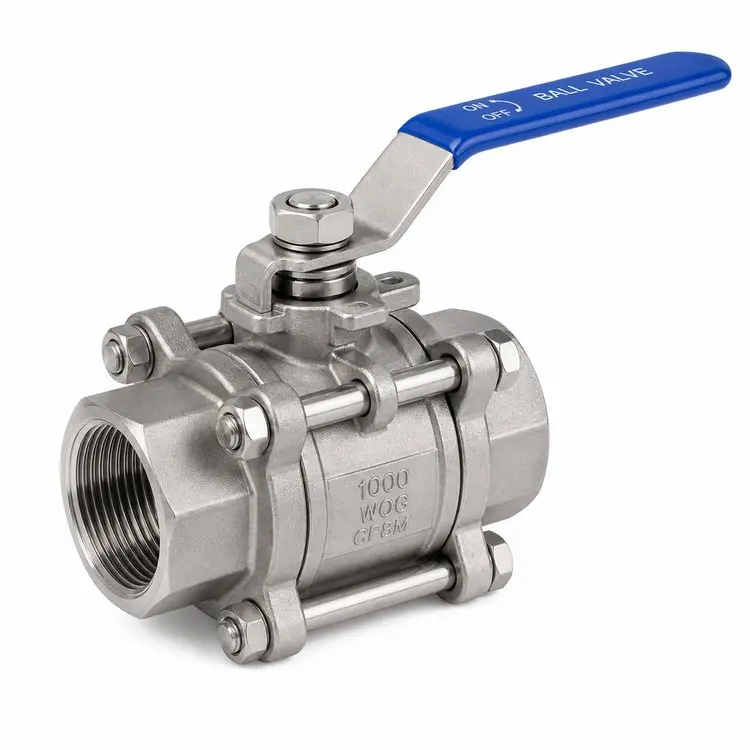
Three-piece threaded layout
Check how the body bolts and center section are accessed, and confirm the thread and seat details in the offer.
Compare three-piece ball valves for industrial isolation and planned maintenance. Check how the center body is removed, which ends fit the line and which service parts can be ordered.
Request a quoteCheck how the body bolts and center section are accessed, and confirm the thread and seat details in the offer.
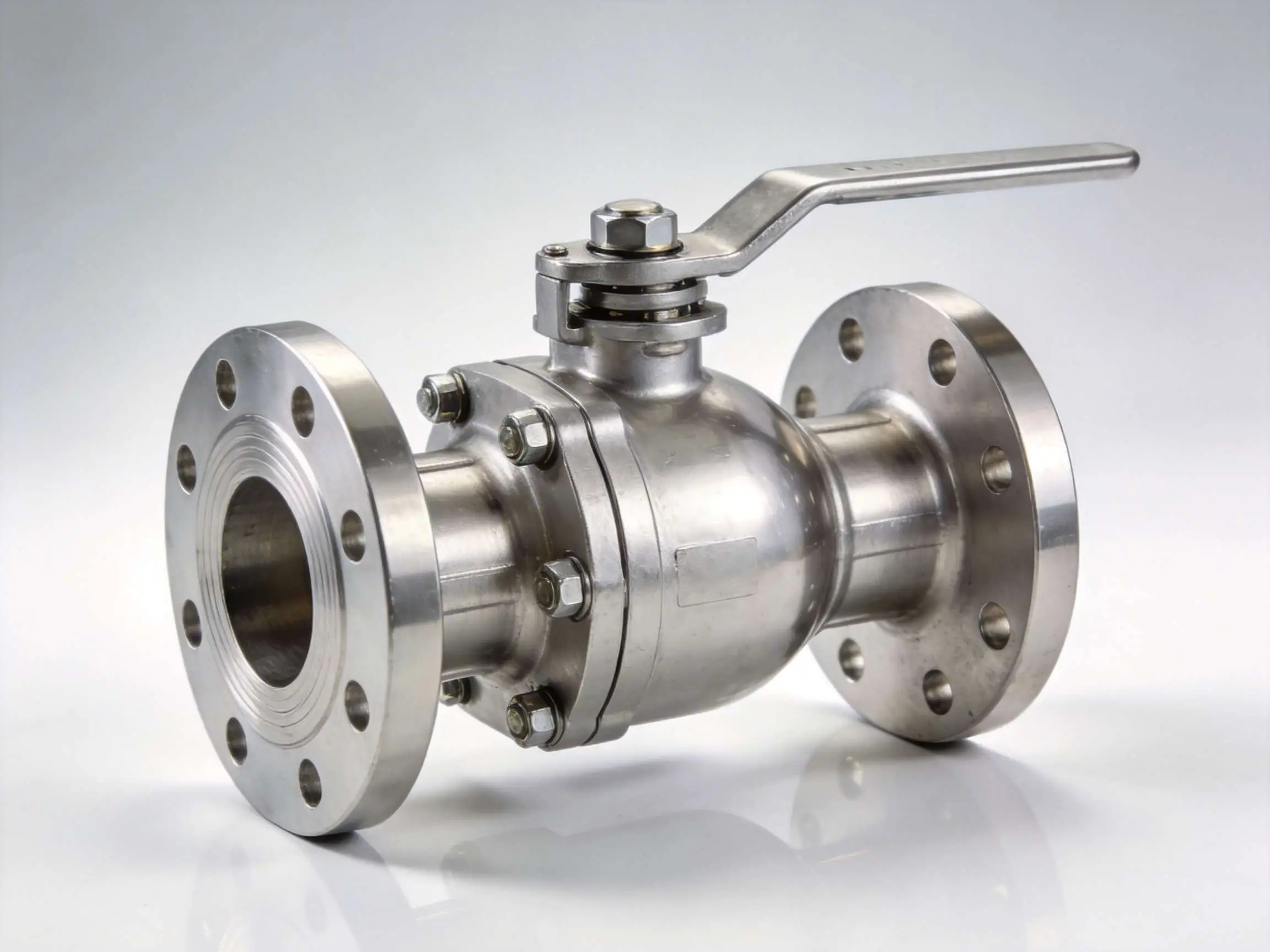
Where line removal is acceptable, compare the flanged option by installed length, service access and spare parts.
A three-piece ball valve has a center body between two end pieces. Depending on the design, the center section may swing out or lift out while the ends remain attached to the pipe. Confirm the actual procedure and the space it needs before treating in-line maintenance as a purchasing requirement. Give the process fluid, maximum and minimum temperatures, and the corresponding pressures. Request the proposed body and trim materials, seat and seal compounds, and the spare-parts list for the exact configuration.
For a threaded installation, send the thread designation and sealing geometry at both ends. For a welded installation, provide the pipe material, dimensions and weld-end requirements. Ask for the manufacturer's installation instructions, including any handling requirements for the center assembly. Check both the operating envelope and the removal envelope. A lever that clears nearby tubing in normal use may still leave too little space to extract the center body, bolts or seats during maintenance.
| Item | Send with your inquiry | Check on the offer |
|---|---|---|
| Maintenance | Clearance available and preferred service procedure | Removal envelope, procedure and required tools |
| Ends and bore | Mating thread or weld details and minimum clear bore | Connection drawing, installed length and clear passage |
| Pressure and materials | Operating cases, fluid, cleaning and leakage needs | Assembly rating and component material schedule |
| Spares and records | Parts stocking plan and acceptance requirements | Kit identifiers, included parts and test documents |
Send Val-Man a line sketch with the available service space and a list of the parts you expect to stock. Ask suppliers to identify whether the quoted center section can be serviced with the ends in place and which kit matches the valve tag. Comparing removal time and spare-parts scope alongside unit price makes the maintenance benefit easier to evaluate.
Review the selection question and confirm the offered drawing, materials and requirements with your inquiry team.
The answer depends on body design, installation and available room. Request the instructions for the quoted model, including which bolts must be removed and how the center section moves. Confirm access with the maintenance team and follow the site's isolation and depressurization requirements before any service work.
Body construction and bore are separate selections. State the minimum clear passage and inspect the drawing for the smallest diameter through the valve and ends. Also confirm the pressure-temperature rating and the size and connection details before comparing full-port offers.
Check which end configurations are documented for the offered design. Give each end designation on the inquiry and request a drawing, rating and installation instructions. If the piping requires different ends, ask the supplier to confirm the combination explicitly.
Ask for the parts list and kits tied to the exact valve and seat or seal configuration. Identify whether the quoted kit covers seats, body seals and stem seals, and confirm any separate parts needed after disassembly. Include required spare quantities by size.
Check lever swing or actuator access and the direction the center body moves during removal. Leave room for the required tools and for withdrawing bolts. Give the supplier a sketch that shows fixed equipment and tubing so the service envelope can be checked.
Send the required size, process duty, installation dimensions and quantity.