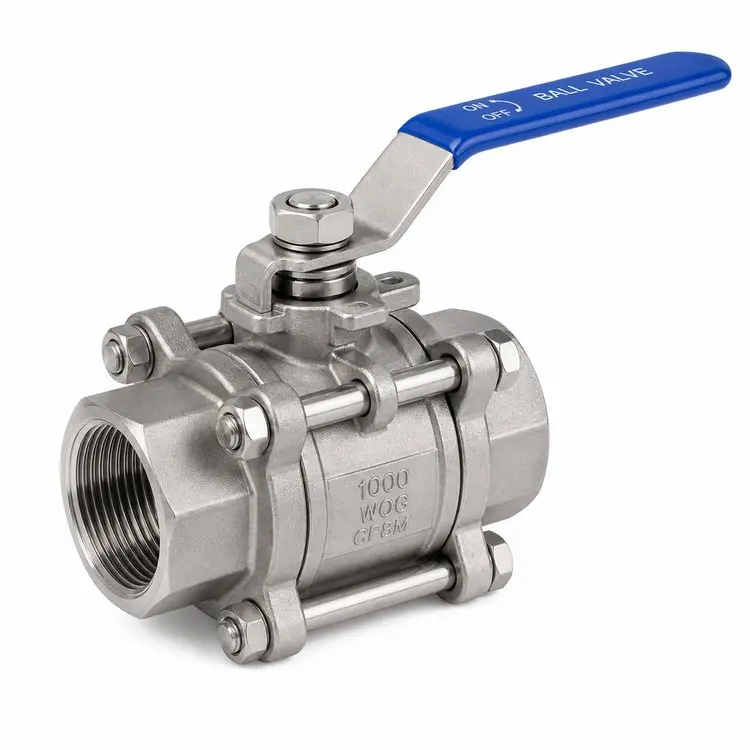
Female-threaded manual assembly
Use the part drawing to confirm component materials, thread details, sealing interface and handle travel.
Specify a threaded ball valve for industrial isolation. Confirm the thread form, sealing method, bore and service limits before ordering a valve for a new line or a replacement.
Request a quoteUse the part drawing to confirm component materials, thread details, sealing interface and handle travel.
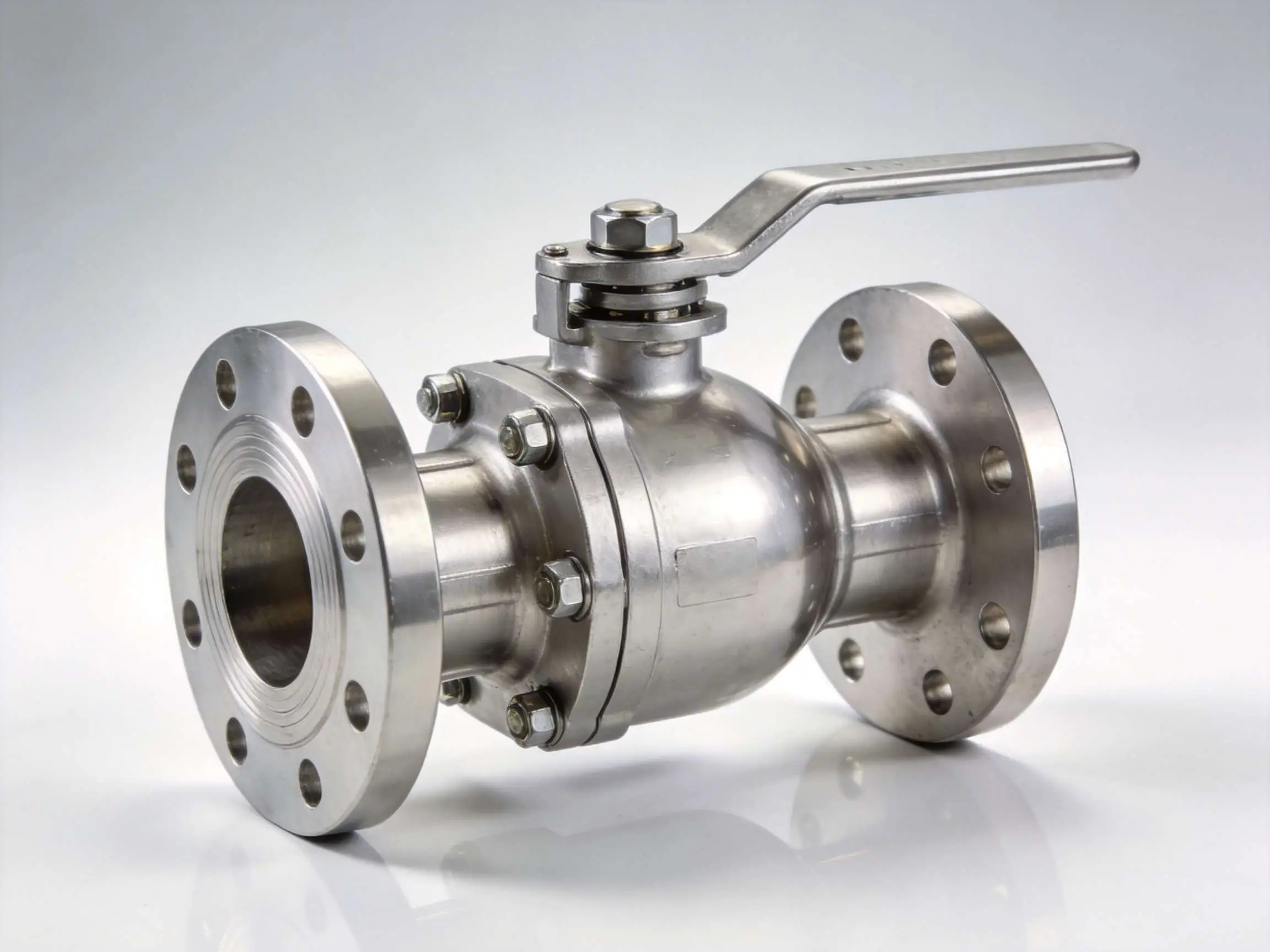
If the piping specification calls for flanges, confirm installed length and flange details before comparing this arrangement with a threaded layout.
Begin with the exact thread designation at both ends. NPT and BSPT are tapered thread families with different geometry. BSPP uses parallel threads, and the joint design determines where its seal is made. Nominal size alone can leave several possibilities. If you are replacing an unmarked valve, send the mating fitting details or have the thread identified using a suitable gauge. Ask the supplier to list the thread standard, size, gender and intended sealing interface for each port on the drawing.
Check the installed length and leave room to turn the body during assembly and swing the handle during operation. Compare the minimum passage diameter if line flow or cleaning access matters. Provide operating and design pressures, temperatures, the fluid and any cleaning exposure. Confirm the body, ball, stem, seat and seal materials at those conditions. If the piping runs to fixed equipment, review the installation sequence and wrench clearance with the fitter before ordering.
| Item | Send with your inquiry | Check on the offer |
|---|---|---|
| Thread fit | End standard, size, gender and fitting details | Drawing and sealing interface for both ends |
| Materials and duty | Fluid, temperature, pressure and cleaning cycle | Body and trim schedule, seats, seals and service limits |
| Flow and space | Minimum bore, available length and handle access | Passage diameter and full installation envelope |
| Maintenance | Access for removal, spare parts and required tests | Assembly instructions, serviceable parts and record scope |
Send Val-Man the fitting details, process conditions and number of valves per size. For repeat orders, include a valve tag, previous drawing or part number if available. Ask each supplier to identify any thread or sealing differences in the quote so a matching nominal size does not hide a mismatch.
Review the selection question and confirm the offered drawing, materials and requirements with your inquiry team.
Treat them as different thread forms and verify both ends before installation. Some nominal sizes look similar and may start to engage. Confirm the exact designation on the valve and fitting drawings. If the pipe connection standard differs, have the piping team approve a matching valve or an appropriate transition.
Provide the parallel thread designation and the joint drawing. Identify the sealing face or feature and the required seal material. Ask the supplier to confirm which mating geometry the offered port accepts, including any required washer or seal and the applicable installation instructions.
Ask for the narrowest clear passage on the offered drawing, including any restriction near the end connections. Compare it with the pipe or fitting bore where flow loss or cleaning access matters. Specify the required minimum diameter on the inquiry for a like-for-like comparison.
Service access depends on the body construction and installation. Request the maintenance drawing, parts list and required movement around the center section. Check the room for tools and removal and follow the offered valve's isolation and maintenance procedures.
Review the offered assembly's pressure-temperature information, including seat and seal limits. Provide the fluid, maximum and minimum temperatures and the corresponding pressures. Include any short cleaning or start-up conditions so the proposed trim and soft parts are reviewed against the complete service.
Send the required size, process duty, installation dimensions and quantity.