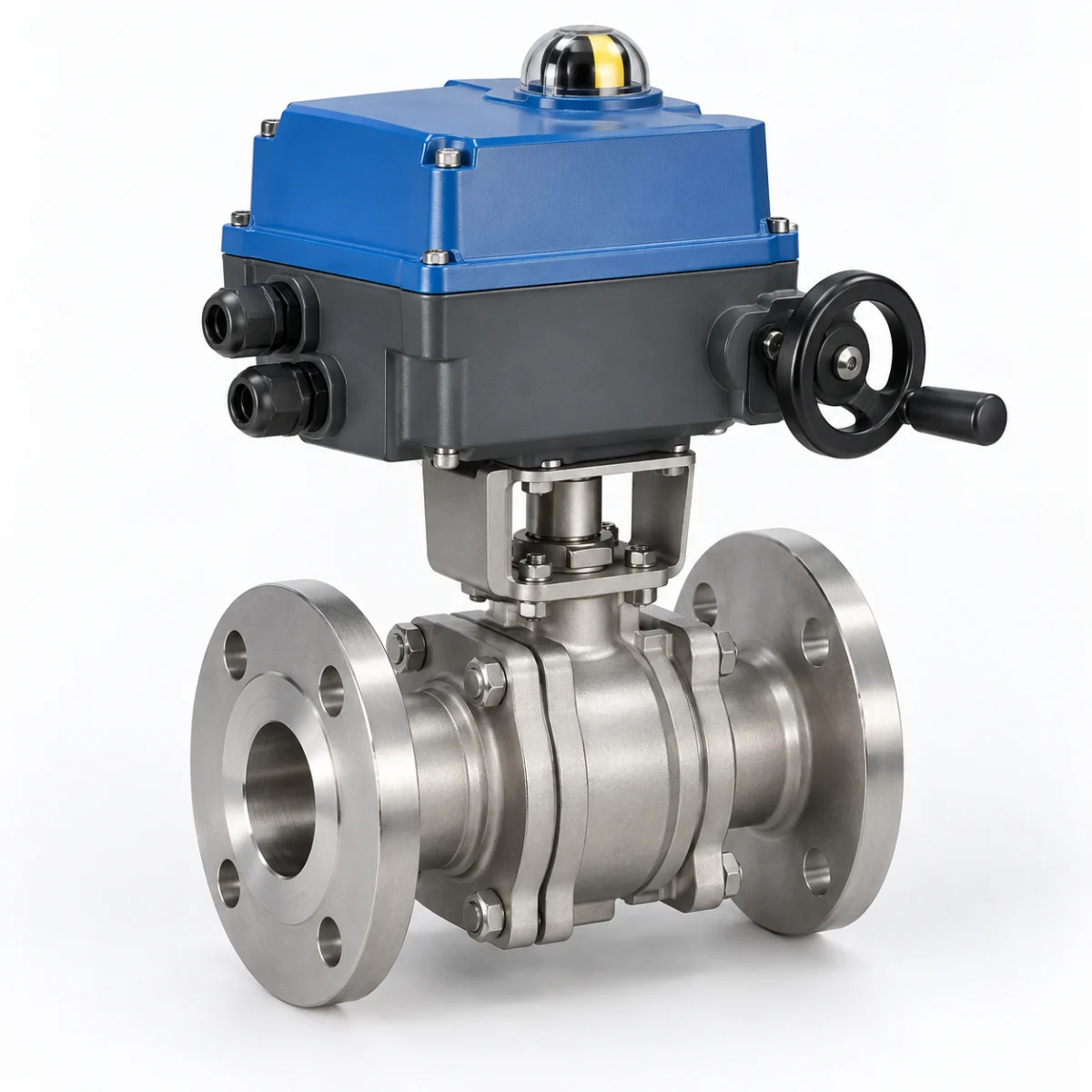
On-off electric isolation
Specify the full-open and full-closed commands and the feedback the controls team needs. Confirm the assembled unit's operating time at the proposed supply voltage.
Specify a motorized ball valve for remote isolation or positioning. Match the electric actuator to valve torque, electrical supply, duty cycle and required power-loss response.
Request a quoteSpecify the full-open and full-closed commands and the feedback the controls team needs. Confirm the assembled unit's operating time at the proposed supply voltage.
Define the valve positions, frequency of movement and expected flow range. Confirm that both the valve trim and the actuator duty support the required control service.
Start with the torque the valve needs at maximum operating differential pressure. Include seat materials, fluid temperature and how long the valve may sit before it must move. Ask for the sizing basis at breakaway, running and closing, including the actuator margin and allowable stem torque. Confirm the required stroke time with the process team. Where a fast closure could cause a pressure surge, review the operating sequence and the pipe system before specifying a closing time.
Send your site voltage, phase and frequency, along with the control signal and required feedback. Separate open and closed indication from analog position feedback and specify which signals the plant actually uses. Check the mounting interface, overall height and cable entry on the arrangement drawing. Include manual override access and space to remove the actuator with the valve in the line. For outdoor or classified locations, put the specific enclosure, ambient temperature and area requirements on the inquiry.
| Item | Send with your inquiry | Check on the offer |
|---|---|---|
| Mechanical sizing | Shutoff differential, fluid, temperature and seat needs | Valve torque basis, actuator output and mounting hardware |
| Power and controls | Power supply, signals, interlocks and status requirements | Wiring diagram, terminals and included control hardware |
| Cycling | Cycle frequency, target stroke time and positioning demands | Actuator duty rating, stroke time and any operating limits |
| Loss of supply | Required valve response and duration without power | Proposed fail mechanism, override and acceptance test |
Send the valve list and actuator schedule together. If different teams own piping and controls, put their requirements on the same tag so the quote identifies the valve, coupling, bracket and electrical accessories included. Val-Man can review the assembly scope, required drawings and test points against those inputs.
Review the selection question and confirm the offered drawing, materials and requirements with your inquiry team.
The response depends on the actuator and power arrangement. Specify whether the valve must remain in position, open or close. If movement is required after supply loss, ask for the proposed stored-energy or backup arrangement and confirm that it can complete the stroke under the specified load.
Send the valve model, size, stem drawing, mounting dimensions and torque data. Check stem engagement, coupling geometry and the allowable load on the stem. Ask for the assembly drawing and confirm access for maintenance and manual operation before approving the retrofit.
Give the expected starts per hour, travel pattern and dwell time. Confirm the actuator duty and thermal limits, and review the valve trim for control service. Ask for the required signals and position feedback and for any restrictions on continuous or intermittent movement.
Confirm the quoted time for a complete travel in both directions and the test conditions behind it. Give the available supply and the maximum differential at operation. If the line has a surge limit, verify the allowed time and sequencing with the system designer.
Ask for the actuator model, supply and current requirements, wiring diagram and control interface. Check cable entry, enclosure, local controls and the status signals furnished. If an area approval is required, specify the applicable classification and request supporting documents for the exact assembly.
Send the required size, process duty, installation dimensions and quantity.